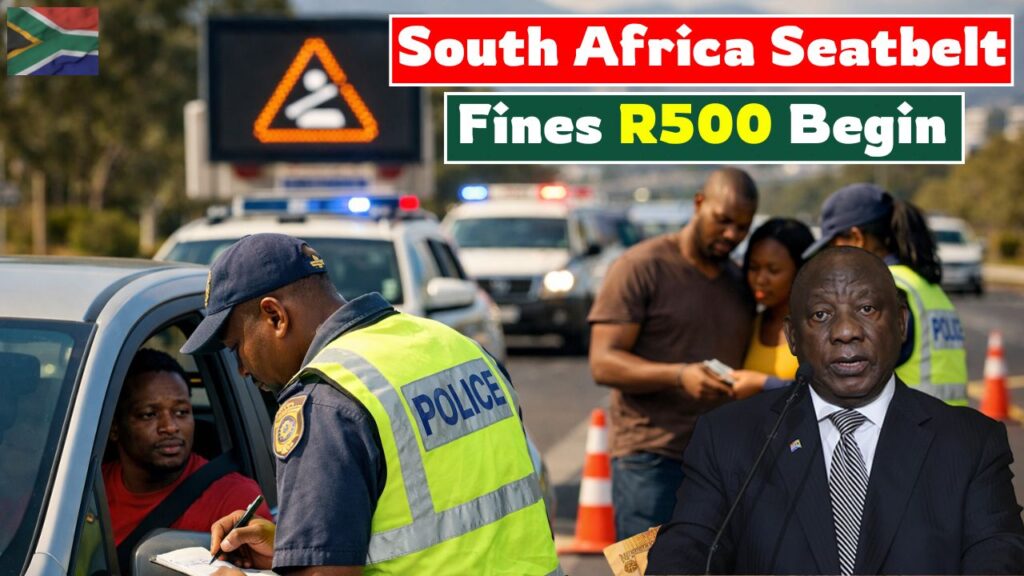
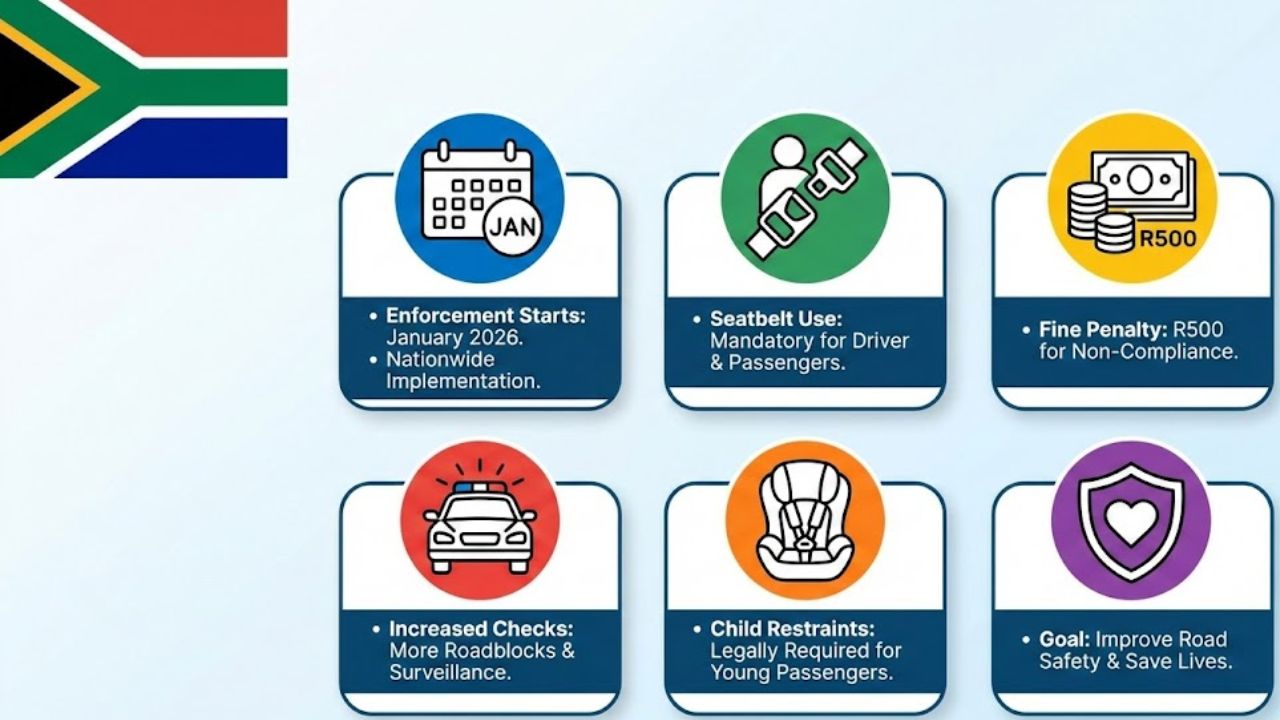
New Seatbelt Law Coming to South Africa in January 2026 The South African government has announced a new seatbelt law that will take effect in January 2026. Under this law drivers & passengers who fail to wear seatbelts will face a R500 fine. The initiative aims to improve road safety across the country by reducing deaths caused by motor vehicle accidents. This regulation represents part of ongoing efforts to address traffic safety concerns. Officials believe that stricter enforcement of seatbelt use will lead to fewer serious injuries and fatalities on South African roads. The R500 penalty applies to both drivers & passengers who are not properly restrained while the vehicle is in motion. Road safety experts have long emphasized that seatbelts are one of the most effective tools for preventing death and injury during collisions. The new law reinforces this message by holding all vehicle occupants accountable for their safety. Authorities expect the financial penalty will encourage compliance and create safer driving habits among the public. The implementation date of January 2026 gives drivers & passengers time to adjust to the stricter requirements. Law enforcement agencies will begin issuing fines once the law officially comes into force. The government hopes this measure will contribute to a significant decrease in road accident casualties throughout South Africa.
Why Introducing a Stricter Seatbelt Law Became Necessary
Road safety data clearly shows that not wearing a seatbelt leads to a high number of serious injuries and fatalities during road accidents. To address this ongoing issue, the government has chosen to impose heavier penalties on those who ignore seatbelt rules. The objective is to improve compliance, encourage safer driving habits, and ultimately save lives on national roads.

Understanding the R500 Seatbelt Fine
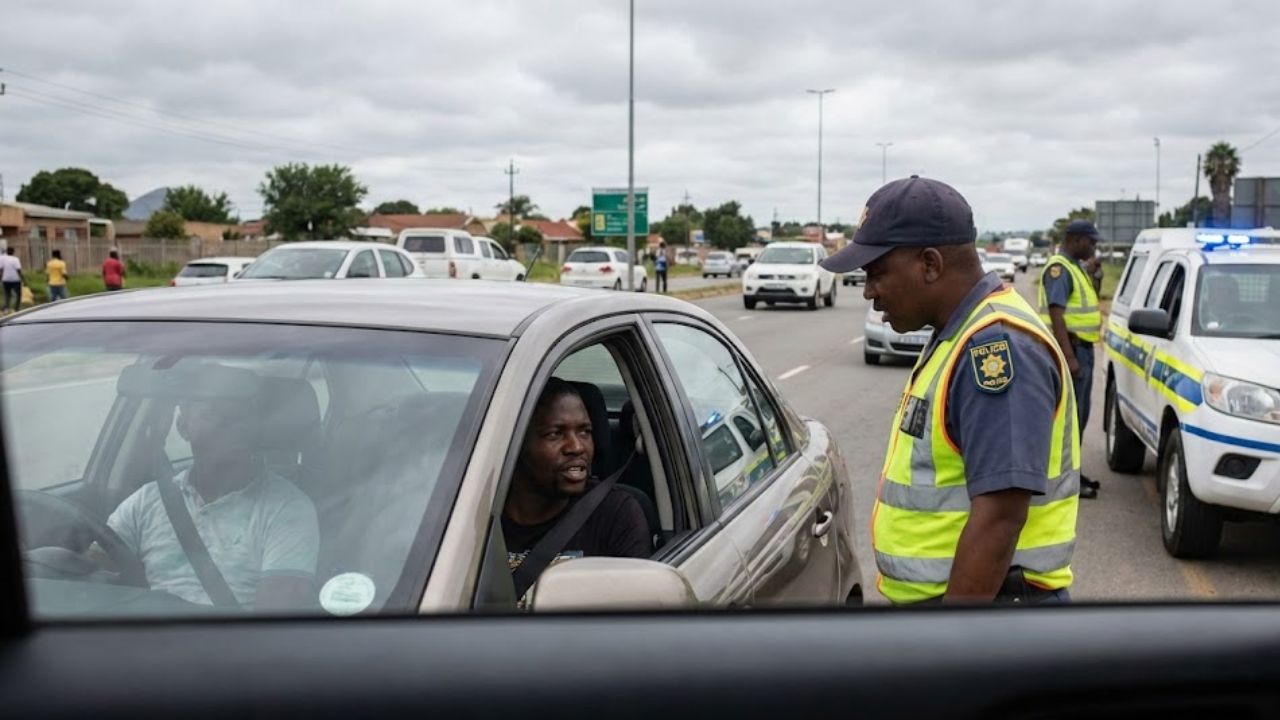
Under the revised regulation, any driver or passenger caught without wearing a seatbelt will receive an on-the-spot fine of R500. Law enforcement officers will mainly enforce this penalty during roadblocks, routine inspections, and traffic stops carried out across different parts of the country.

Who Is Required to Wear a Seatbelt?
The updated law makes it mandatory for all vehicle occupants to wear seatbelts. This applies to drivers and passengers, including adults and children, seated in both the front and rear seats. The rule aligns with international road safety standards aimed at reducing preventable injuries.
When the New Rule Comes Into Force
Enforcement of the seatbelt requirement is expected to begin in January 2026. This timeline allows motorists sufficient time to become familiar with the updated regulation. As the enforcement date approaches, authorities are expected to inform and educate the public to ensure widespread awareness and compliance.
How Authorities Will Enforce the Law
Traffic and highway officers will conduct regular roadside checks, including random inspections and targeted traffic operations, to monitor compliance. Drivers or passengers found not wearing seatbelts may receive an immediate penalty. Repeat offences could lead to further legal consequences.

What This Means for Drivers and Passengers
The introduction of the R500 fine serves as a clear reminder of personal responsibility for everyone using the road. Wearing a seatbelt not only helps motorists avoid financial penalties but also ensures the safety of all occupants inside the vehicle.
Why Wearing Seatbelts Is So Important
Safety specialists widely agree that seatbelts are the most effective protection against severe injuries and death in vehicle crashes. Strong enforcement and meaningful penalties are intended to change long-standing unsafe habits and promote a culture of road safety.
Getting Ready for the New Regulation
Drivers are encouraged to ensure that every passenger buckles up before the vehicle moves. Promoting seatbelt use among family members, friends, and fellow passengers can help prevent penalties while supporting safer travel for everyone.
Long-Term Goals for Road Safety
The R500 fine for seatbelt violations represents a serious step toward improving road safety standards and aligning local laws with global best practices. By clearly communicating and enforcing this regulation, authorities aim to foster responsible road behaviour and protect lives across South Africa.