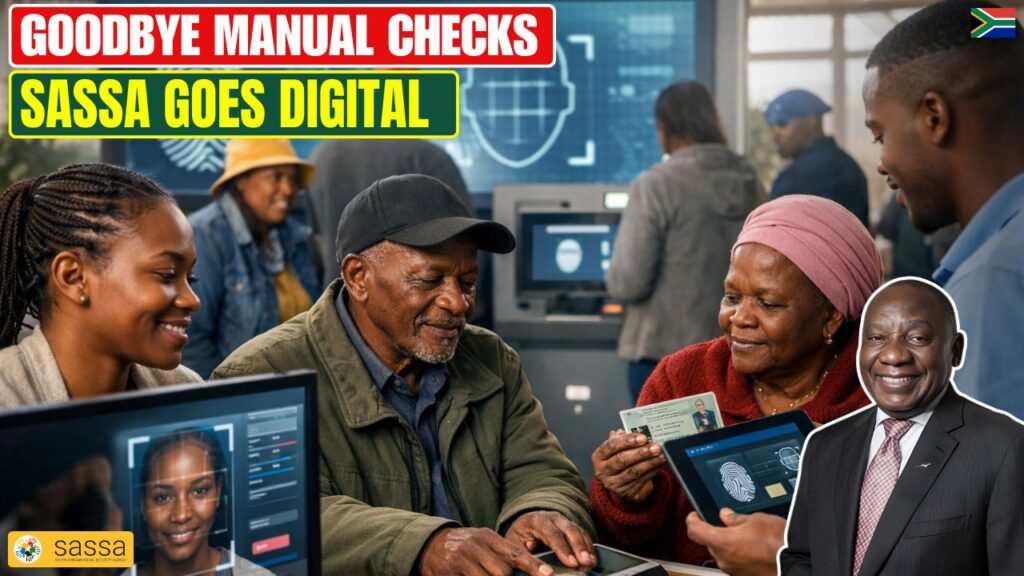
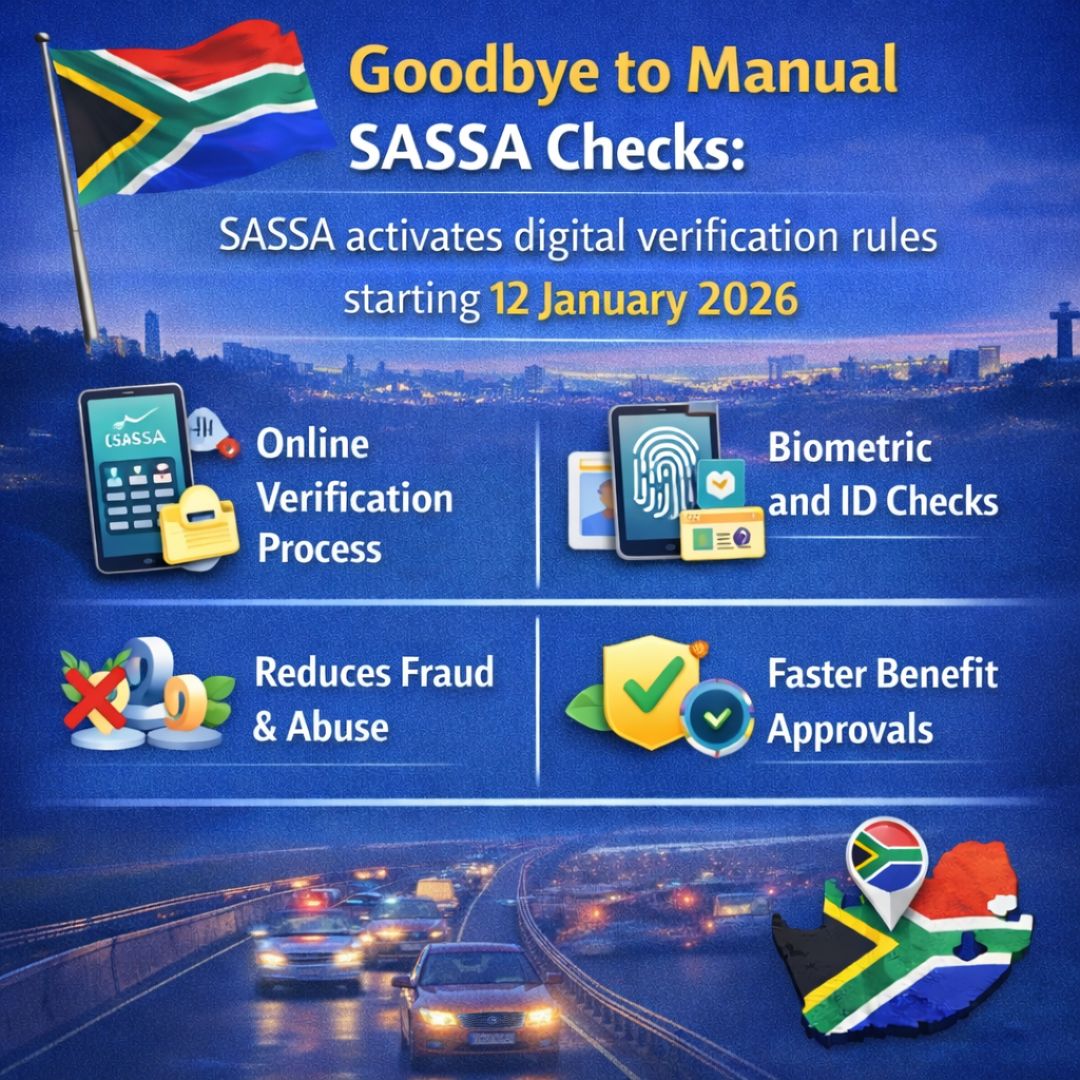
South Africa is getting ready for a big change in how social grants are checked as SASSA stops using manual verification. Starting on 12 January 2026 a new digital system will change how people confirm their information. The goal is to cut down on fraud and make approvals faster. This change affects millions of people who depend on grants for their everyday expenses and it puts technology at the heart of how grants are managed. Learning how the new system works is important so that people can avoid delays or missed payments during the switch.
SASSA Digital Verification Rule: What It Means
The new SASSA digital verification rule replaces the old, paperwork-heavy process with automated checks that connect directly to national databases. Instead of making multiple trips to SASSA offices, beneficiaries will now undergo verification through automated identity checks, real-time data matching, secure biometric systems, and linked government records. This update is designed to confirm income, identity, and eligibility more accurately. For many South Africans, this change means shorter queues and faster verification. To ensure smooth processing, beneficiaries must keep personal information up to date, including valid IDs and correct banking details.

How Digital Checks Affect Grant Recipients
For those receiving grants across South Africa, the impact of digital verification will be significant. Payments will now depend on system-based approvals, centralised verification, digital compliance tracking, and automated error detection. Beneficiaries with mismatched or outdated information may be prompted to update their records before payments continue. While this new approach may feel strict initially, it is intended to protect genuine recipients and prevent misuse of funds. Rural and elderly beneficiaries are encouraged to seek assistance early to avoid challenges as manual verification is gradually phased out.

Why Manual Verification is Being Phased Out
SASSA’s move away from manual verification is driven by the need for efficiency and accountability. Manual processes were prone to delays, duplication, and fraud, whereas digital systems provide faster processing, stronger fraud prevention, improved audit trails, and consistent eligibility checks. Leveraging technology allows SASSA to distribute grants more transparently and ensure funds reach the right people. Although there may be short-term adjustments, the long-term goal is a more reliable and sustainable social grant system.

Next Steps for Beneficiaries
The shift to digital verification marks a major change for SASSA and South Africa’s social grant system. With nationwide rollout, mandatory digital checks, and updated beneficiary records, recipients must take proactive steps. This includes reviewing personal information, responding to verification requests, and seeking help when necessary. While adjusting to this new system may take time, it is designed to strengthen trust in the grant system and ensure long-term support for those who rely on it the most.

| Verification Aspect | Old Manual Process | New Digital Process |
|---|---|---|
| Identity Check | Paper documents | Digital ID matching |
| Processing Time | Several weeks | Near real-time |
| Error Detection | Manual review | Automated alerts |
| Fraud Control | Limited tracking | Advanced system checks |